

7 Signs Your Pet Has Dental Disease
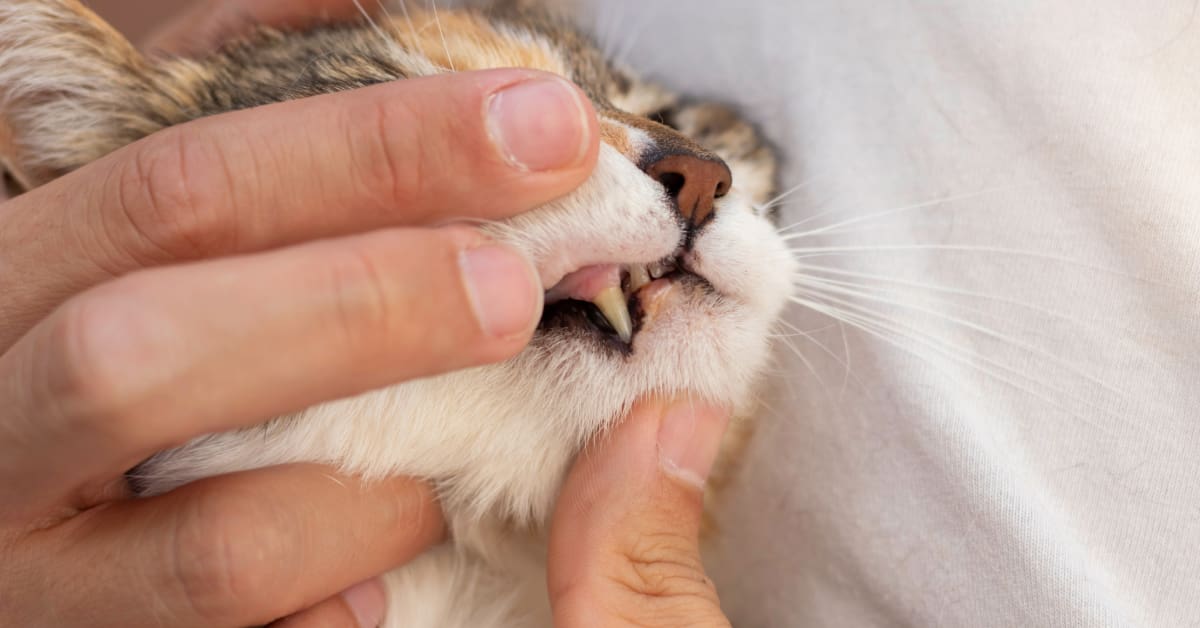
Animal dental disease is the most common health condition diagnosed in dogs and cats, yet it often goes undetected until it has caused significant damage. By age three, most pets already show signs of periodontal disease, the most prevalent form of dental disease in animals. The problem is that pets are remarkably good at hiding oral discomfort, which means the signs can be subtle, easy to miss, or mistaken for normal behavior. Knowing what to look for puts you one step ahead in protecting your pet’s health. In this blog, we’ll explore seven signs that your dog or cat may be dealing with dental disease.
What Is Animal Dental Disease?
Animal dental disease refers to a range of conditions affecting the teeth, gums, and surrounding structures of the mouth. The most common form is periodontal disease, which begins with plaque and tartar buildup on the teeth and progresses to inflammation of the gums (gingivitis), infection, bone loss, and eventually tooth loss. Other forms of dental disease in pets include tooth resorption (common in cats), fractured teeth, and oral masses.
Left untreated, pet dental disease doesn’t stay confined to the mouth. Bacteria from oral infections can enter the bloodstream and affect the heart, kidneys, and liver over time. This is why our veterinary team at Partners Animal Hospital Fruitville considers dental health an essential part of your pet’s overall wellness care.
Sign #1: Persistent Bad Breath
One of the most recognizable signs of dental disease in pets is persistent, foul-smelling breath. While a little “pet breath” is normal, an odor that is consistently strong, rotting, or abnormally unpleasant is a clinical red flag. That smell typically comes from the bacteria that thrive in plaque and tartar buildup, and in more advanced cases, from infected gum tissue or a dying tooth.
If your dog or cat’s breath has noticeably worsened or you’re regularly pulling away from their kisses, it’s worth mentioning to your veterinarian at Partners Animal Hospital Fruitville. Persistent halitosis is one of the most consistent early indicators of animal dental disease.
Sign #2: Yellow or Brown Buildup on the Teeth
Tartar, or the hardened, yellow or brown mineral deposit that accumulates on teeth, is both a sign and a cause of dental disease in dogs and cats. Unlike soft plaque, tartar cannot be removed by brushing at home once it forms. It irritates the gumline, creates pockets where bacteria thrive, and drives the progression of periodontal disease.
Take a look at your pet’s teeth near the gumline, especially on the large back teeth (carnassials) and canines. Heavy yellow or brown buildup is a clear sign that your pet is overdue for a professional dental cleaning. At Partners Animal Hospital Fruitville, professional dental cleanings are performed under anesthesia to allow a thorough evaluation and cleaning of every tooth surface, including below the gumline.
Sign #3: Red, Swollen, or Bleeding Gums
Healthy gum tissue in pets should be pink, firm, and smooth. Red, puffy, or inflamed gums are a sign of gingivitis, which is the earliest and most reversible stage of periodontal disease. If you notice that your pet’s gums bleed when they chew, that’s a further sign of active inflammation and the need for veterinary dental care.
Gingivitis caused by plaque and tartar accumulation is the gateway to more serious forms of animal dental disease. When it’s caught early, professional cleaning and at-home dental care can halt or even reverse the process. When it’s left untreated, gingivitis advances to periodontitis, which causes irreversible damage to the bone and tissues that support the teeth.
Sign #4: Difficulty Eating or Changes in Eating Behavior
Because pets instinctively hide pain, changes in eating behavior are often the first and sometimes the only, sign that a pet is experiencing oral discomfort. Watch for these behavioral changes that may indicate dental disease in your dog or cat:
- Dropping food from the mouth while chewing
- Chewing only on one side of the mouth
- Showing reluctance to eat hard kibble or crunchy treats
- Taking longer than usual to finish meals
- Approaching the food bowl and then walking away without eating
- Preferring soft food over their usual diet
These behaviors can also signal other health conditions, which is another reason a veterinary exam is the right next step. At Partners Animal Hospital Fruitville, our veterinarians perform a thorough oral examination as part of every wellness visit to identify problems your pet may be hiding.
Sign #5: Pawing at the Face or Mouth
A pet that repeatedly paws at their face, rubs their muzzle against surfaces, or shows signs of facial discomfort may be experiencing oral pain. This behavior is one of the more visible signs of dental disease in dogs and cats, particularly when a tooth is fractured, abscessed, or severely infected.
Tooth root abscesses, which are infections that develop at the base of a tooth beneath the gumline, are a serious complication of advanced pet dental disease. They can cause significant pain, visible facial swelling, and sometimes even a draining wound below the eye (most commonly from the upper fourth premolar in dogs). If you notice any swelling around your pet’s face or jaw, this warrants prompt veterinary attention.
Sign #6: Loose or Missing Teeth
Adult pets should not lose teeth. A loose or missing tooth in a dog or cat is a sign of advanced animal dental disease, specifically, severe bone and tissue loss that has destroyed the structures holding the tooth in place. Periodontal disease is the most common cause of tooth loss in pets.
By the time a tooth becomes loose, significant disease has already progressed well beneath the gumline where it’s not visible to the naked eye. This is one of the most important reasons veterinarians recommend dental X-rays as part of professional cleanings. The majority of a tooth’s structure and the disease affecting it is invisible without imaging.
Sign #7: Excessive Drooling or Drooling with Blood
While some breeds (like Saint Bernards and Basset Hounds) are naturally drooly, a sudden increase in drooling or drooling tinged with blood is not normal. These signs can indicate painful oral conditions associated with dental disease in pets, including severe gingivitis, an oral ulcer, a fractured tooth, or an oral mass.
Cats in particular may drool more noticeably when they’re experiencing significant oral pain, since it can interfere with their ability to swallow comfortably. If your cat is drooling when they don’t normally, or if any pet is producing blood-tinged saliva, a veterinary examination is warranted without delay.
How Is Animal Dental Disease Diagnosed and Treated?
Diagnosing pet dental disease starts with an oral examination during a wellness visit, but a complete assessment requires a professional dental cleaning under anesthesia. This is because most dental disease occurs below the gumline and cannot be accurately evaluated in an awake, moving patient. At Partners Animal Hospital Fruitville, dental cleanings include:
- Pre-anesthetic bloodwork to evaluate organ function and ensure your pet is safe for anesthesia
- Full-mouth dental X-rays to assess tooth roots, bone density, and subgingival disease
- Scaling and polishing to remove plaque and tartar from every tooth surface, including below the gumline
- Periodontal probing to assess gum pocket depth and identify teeth with structural compromise
- Extractions or other treatment for teeth that are diseased beyond recovery
Dental disease in animals is graded on a scale from Grade 1 (early gingivitis) to Grade 4 (advanced periodontitis with significant bone loss). Treatment recommendations depend on the stage of disease present and the condition of individual teeth.
How to Prevent Dental Disease in Your Pet
Prevention is the most effective strategy against animal dental disease. The gold standard for home dental care in pets is daily tooth brushing using a pet-safe toothpaste and never human toothpaste, which contains ingredients toxic to animals. Even brushing a few times per week makes a meaningful difference in slowing plaque and tartar buildup.
In addition to brushing, your Partners Animal Hospital Fruitville veterinarian may recommend dental diets, water additives, dental chews, or other Veterinary Oral Health Council (VOHC)-approved products that have been clinically shown to reduce plaque and tartar. Regular professional cleanings based on your pet’s individual needs are also a critical part of prevention.
When to Call the Vet About Your Pet’s Dental Health
If your dog or cat is showing any of the seven signs of dental disease described above, schedule a veterinary exam at Partners Animal Hospital Fruitville in Sarasota, FL. You don’t have to wait for a visible problem. Annual dental evaluations during wellness exams are the most reliable way to catch pet dental disease before it advances.
]Animal dental disease is progressive, painful, and largely preventable. The earlier it’s identified and treated, the better the outcome for your pet’s comfort, health, and quality of life. Our team is here to help you understand your pet’s oral health and create a dental care plan that works for both of you. Call Partners Animal Hospital Fruitville at 941-297-0884 or make an appointment today for your pet’s next dental evaluation.
Recent Posts
About Us
At Partners Veterinary Group, we believe in energizing our team members through shared values, while helping them create value for our clients and patients. Knowing we can help make pets' and people's lives better motivates us to continually strive for excellence and love what we do.
Our team consistently works to build educational, supportive, and cooperative work environments that cater to positive experiences and professional growth. We're constantly evolving, creating innovative ways to deliver cutting-edge medicine to our patients. We equip our teams with tools to enhance their skills and improve their knowledge.